
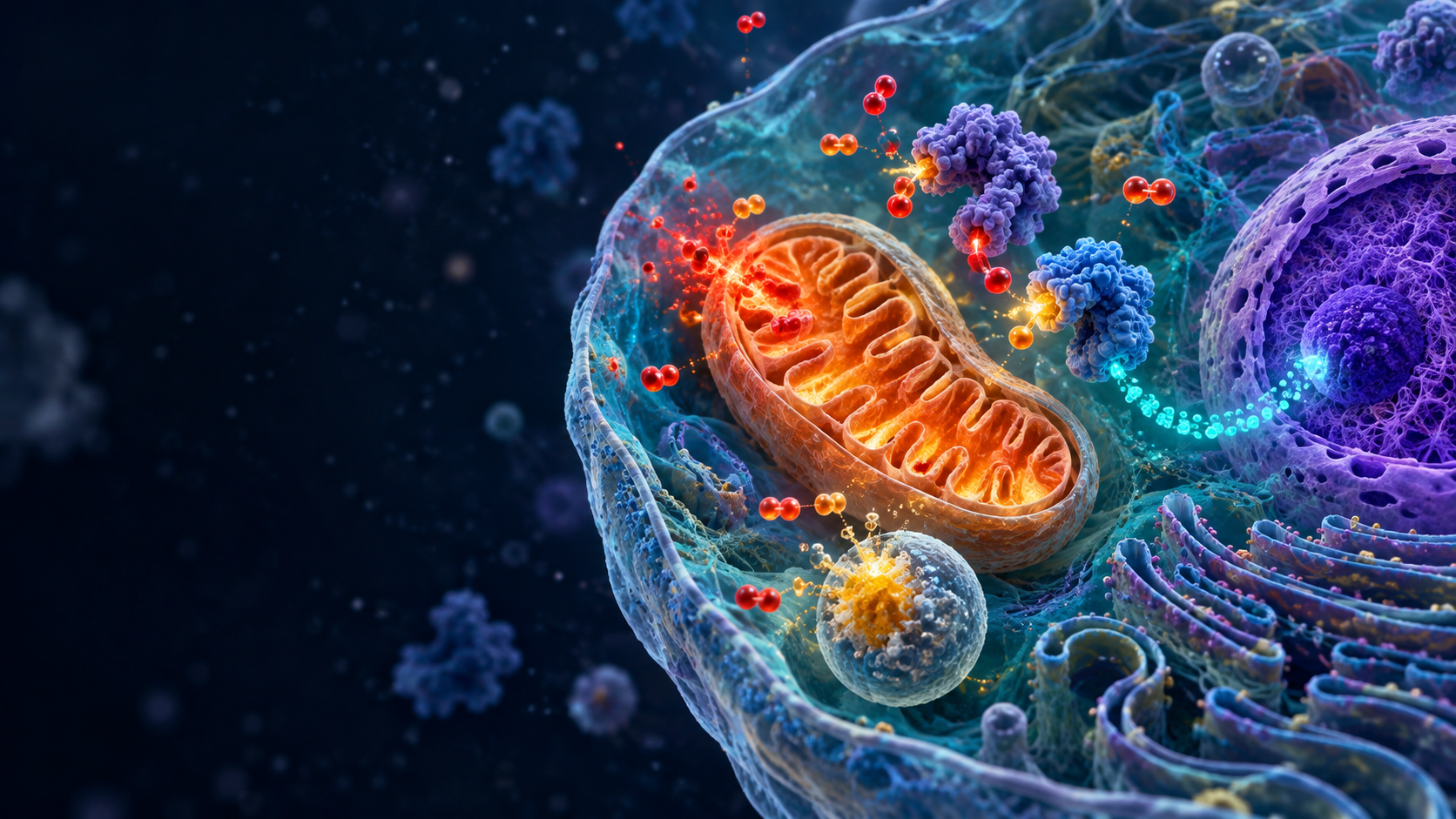
CELL DEFENSE / REDOX STRATEGY
ROS
Defense
Protect the cell.
Keep the signal alive.
Build antioxidant defenses, recycle glutathione, and respond to changing ROS sources inside a living cell.
120 seconds · mouse, keyboard & touch
A simplified mammalian cell. No biology quiz gates.
REDOX CONTROL ROOM
Keep the cell in balance
2:00
Cell integrity100%
Build credits10Replenished by metabolism
Reduced glutathione160 GSH0 GSSG
Reducing power80 NADPHRecycling ready
LIVE CELL / select a compartmentO₂•⁻ H₂O₂
Cytosolic H₂O₂ signalSignal available
Too littleSignal band: 10–28Excess
Signal window active
All loads, credits, rates, signal bands and integrity values are teaching mechanics, not measured concentrations or biological thresholds. Enzyme tuning is a player abstraction; basal defenses remain active.
YOUR CELL / ROUND REPORT
For the curious at heart. A pocket-sized collection of science-inspired games.
Made for a quick break, a little discovery, and one more round.
Your browser is your playground.